Monday, 25 February 2019

Lung Cancer Awareness

Lung cancer from surgeryxchange

LUNG CANCER

Cancer is an infection in which cells of the body grow disorderly. When cancer begins in lungs, is called lung cancer. It is also known as lung carcinoma which starts in lungs and may spread to lymph nodes or other organs in the body, such as the brain. Cancer from other body parts may also spread to the lungs. When cancer cells spread from one part of the body to another, called as metastases. Lung cancers generally divided into two main types called as small cell and non-small cell. These kinds of lung cancer develop in a different way and are treated in another way. Types of lung cancer-
  1. Non-small cell lung cancer- Non-small cell lung cancer is a broad category for various types of lung cancers that have similar behavior. Non-small cell lung cancers contain squamous cell carcinoma, adenocarcinoma and large cell carcinoma.
  2. Small cell lung cancer-Small cell lung cancer occurs almost exclusively in heavy smokers and is less common than non-small cell lung cancer.

Symptoms of Lung Cancer

  • Recent cough that doesn’t go away.
  • Coughing blood, even a small amount.
  • Difficulty in breathing.
  • Chest pain.
  • Losing weight without even trying.
  • Bone pain.
  • Heavy headaches.

Causes of Lung Cancer

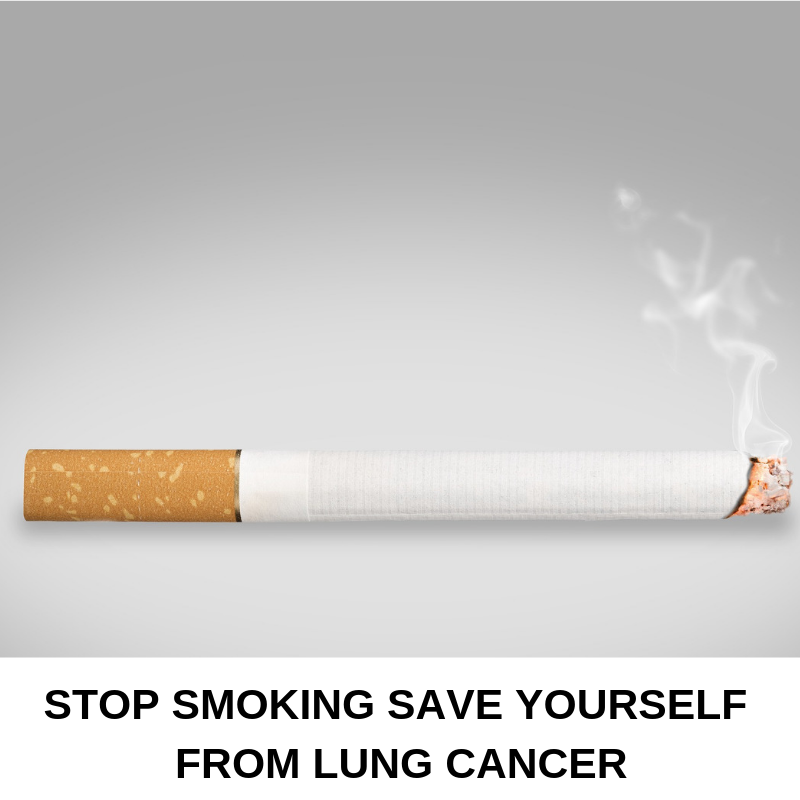
Smoking is the major cause of lung cancers both in smokers and in people exposed to secondhand smoke. But lung cancer also happens to people who never smoked and in those who never had prolonged exposure to secondhand smoke. In these circumstances, there might be no strong basis of lung cancer.
How smoking causes lung cancer
Doctors consider smoking is the cause of lung cancer by damaging the cells that line the lungs. When you huff cigarette smoke, which is filled with cancer triggering substances, alterations in lung tissue start instantly.
Initially your body might be able to repair this damage. But with each constant disclosure, standard cells that line your lungs are gradually damaged. After sometime, the damage causes cells to act strangely and ultimately cancer may develop.

Risk factors for lung cancer include

  • The danger of lung cancer rises with the number of cigarettes you smoke each day and the number of years you have smoked. Giving up at any age can significantly lower your risk of developing lung cancer.
  • Exposure to secondhand smoke.Even if you do not smoke, the threat of lung cancer increases if you are near any secondhand smoke.
  • Exposure to radon gas.Radon is created by the regular break of uranium in soil, rock and water that eventually becomes part of the air you breathe.
  • Exposure to asbestos.Workstation disclosure to asbestos and other ingredients known to cause cancer.
  • Family history of lung cancer.Sometimes it’s the risk from the hereditary genes, as it may happen to the future generation.
 Complications
Lung cancer can cause complications, such as:
  • Shortness of breath.People suffering with lung cancer can have a speedy breathing due to cancer which blocks the major passage. It can also be the reason of fluids to gather around the lungs, which makes it harder to breathe.
  • Coughing up blood.Lung cancer may cause bleeding in the air passage, which causes blood in cough. At times, it can become severe but treatments are offered to control it.
  • Progressive lung cancer that spreads to the coating of lung or to another area of the body, causes pain.
  • Liquid in chest. Lung cancer causes fluid to accumulate in the space that surrounds the affected lung in the chest cavity (pleural space).
  • Cancer which extend to other parts of body.Lung cancer often spreads to other parts of the body like bone.
Prevention
There is no other way to avoid lung cancer, but can lessen your risk if you follow:
  • Don’t smoke.If you’ve never smoked, don’t start and talk to others to stop smoking.
  • Stop smoking.Stop smoking now. Deserting decreases the chance of lung cancer, even if you smoked for years.
  • Avoid secondhand smoke.If you stay or work with smoker then request him or her to quit smoking. The best thing is to request him or her to smoke outside. Try to dodge places where folks smoke, and opt-out for a smoke free zone.
  • Avoid carcinogens at work.Take actions to safeguard yourself from exposure to toxic chemicals at workplace. Follow your company’s provisions.
  • Have fruits and vegetables diet.Select healthy nutrition with a variety of fruits and vegetables.
  • Exercise most days of the week.If you do not exercise daily, start slowly. Try to exercise most days of the week.
Diagnosis
After a physical inspection, the doctor will instruct you to get ready for particular tests, like:
  • Imaging tests:
  • Sputum cytology:
A tissue removal can decide if the tumor cells are cancerous. A tissue sample can be obtained by:
  • Bronchoscopy:
  • Mediastinoscopy:
  • Needle:
Tissue samples are sent to the pathologist to analyze. If the result comes up as affirmative for cancer, then further testing is done to check the cancer has spread or not.
Treatment for lung cancer
If you’re diagnosed with lung cancer, your care will likely be managed by a team of doctors which include:
  • thoracic surgeon
  • lung expert
  • medical oncologist
  • radiation oncologist
Converse all the treatment possibilities before making a decision. Your doctors will organize care and so keep each other up-to-date.
Treatment for non-small cell lung cancer differs from patient to patient. Much depends on specific details of your health.

Cost

The cost of lung cancer depends on the patient’s condition. To know the cost click here-    https://surgeryxchange.com/signup

Tuesday, 19 February 2019

Why Your Knee Hurts?

Any pain in knee can lead to knee replacement surgery.

Some of reasons are listed below:

1. Sprain–
If you have any occurrence of abrupt pain in the knee while doing any physical activity, then you have possibly just strained or sprained the knee. This shows that the knee tissues have been strained, but not permanently damaged. Most of the sprain can be accomplished by some of the simple home remedies like applying ice, compression, and elevation. To prevent such damages, you should always warm up before working out, stretch legs to cool down after exercising, increase activity levels slowly over time.
2. Anterior knee pain–
Pain in-front of the knee covering the knee cap called as anterior knee pain and is related to earlier wounds of the knees, muscle weakness and small replacement of knee cap. The pain sometimes disturbs both the knees.
3. Meniscus and cartilage damage-
Menisci cushion the bones and perform as jolt absorbers. They can be torn due to a sudden twist of the knee joint, which results in pain and enlargement in the knee. Sometimes, the injury to the knee joint can disrupt a loose cartilage, and its pieces get stuck in the joints which causes pain and bulge.
4. Osteoarthritis-
This is the foremost common explanation for knee pain, especially in older adults. It causes the knee joint to pain and swell when you are active. The pain may get worse due to increase in the weigh on the knees.
5. Tendonitis-
Are you sportsperson? If yes, then be alert as you are at danger of “jumper’s knee”. It is a condition caused by jumping activities in sports. If the tendon is injured or overworked, that may cause swelling of the tendon. Along with critical pain, your knee may also be inflamed, and can become red and warm.
6. Bursitis-
Bursa is a bag which contains fluid under the skin above your knee joint. If you go through frequent falls or recurring bending and kneeling, it can cause irritation of bursa resulting in pain and swelling in the knee cap region. Physicians decision this condition as prepatellar redness or “preacher’s knee”.
7. Bleeding in joint-
Critical injury to the knee joint can cause bleeding in the joint spaces, a condition known as haemarthrosis. This sometimes happens if a very important ligament is torn or if there’s any fracture to at least one of the knee bones. If you’ve got symptoms like swelling of the knee heat stiffness and bruising, it indicates haemarthrosis, and you should immediately go to the hospital.
8. Gout-
This is a type of arthritis caused by the collection of uric acid, which advances into crystals in the joints which results in painful and inflamed joints. You may feel severe pain in the knee with joint movement, and you may also feel pain even while resting at night.
9. Iliotibial Band Syndrome-
The iliotibial band is a part of tissue that flows from your hip to the outer part of the knee. When you do any activity, it may sometimes become inflamed, causing pain in the knees. This condition is often seen in runners whereas going downhill.
10. Dislocated Knee Cap-
In some cases, the knee cap may slide out of position causing knee pain and swelling. Mild to moderate pain may be with success treated reception. Whether thanks to a sprain or inflammatory disease, there are several ways to fight knee pain. But if the pain is severe and caused by injury, you must head to the doctor and request medical attention. In some cases, surgery may be recommended.

Wednesday, 23 January 2019

THINGS YOU SHOULD KNOW ABOUT LIVER CANCER


LIVER CANCER

Liver cancer is the cancer that starts in the cells of your liver. Your liver is a football-sized organ that assembles in the upper right part of abdomen, beneath your diaphragm and above your stomach.
Numerous types of cancer can formulate in the liver from which the most common type of liver cancer is hepatocellular carcinoma, which begins in the main type of liver cell (hepatocyte). Other types of liver cancer, such as intrahepatic cholangiocarcinoma and hepatoblastoma, are very uncommon.
TYPES:

1.      Hepatocellular Carcinoma

Hepatocellular carcinoma (HCC) is very common type of primary liver cancer. Hepatocellular carcinoma occurs mainly in people with chronic liver diseases, such as cirrhosis caused by hepatitis B or hepatitis C infection.

2.      Cholangiocarcinoma

Cholangiocarcinoma is cancer that creates in the bile duct, that carry the digestive fluid bile. It connects your liver to your gallbladder and to your small intestine. This condition, also known as bile duct cancer, is an uncommon form of cancer that occurs mostly in people older than age 50, though it can occur at any age.

SYMPTOMS:
·       Jaundice
·       Penetratingly itchy skin
·       White-colored stools
·       Fatigue
·       Abdominal pain
·       Unplanned weight loss


CAUSES:

It is not known what the roots of most cases of liver cancer are. But in some cases, the cause is known. For example, chronic infection with certain hepatitis viruses can cause liver cancer.
Liver cancer happens when liver cells develop changes in their DNA the material that provides instructions for every chemical process in your body. DNA mutations cause changes in these instructions. One result is that cells may begin to grow out of control and eventually form a tumor which is a mass of cancerous cells.

RISK FACTORS:

Elements that rise the risk of liver cancer contain:
·         Prolonged infection with HBV or HCV. Prolonged infection with the hepatitis B virus (HBV) or hepatitis C virus (HCV) rises risk of liver cancer.
·         Cirrhosis. This enhancing and irretrievable condition causes scar tissue to form in liver and spreads the possibilities of developing the liver cancer.
·         Some inherited liver diseases. Liver illness that increase the risk of liver cancer.
·         Diabetes. People with this blood sugar condition have a greater risk of liver cancer than those who don't have diabetes.
·         Fatty liver disease. The growth of fat in the liver upsurges the risk of liver cancer.
·         Extreme alcohol consumption. Drinking more than an average amount of alcohol daily over many years can lead to liver damage and increases the risk of liver cancer.

PREVENTION:

Decrease the possibility of cirrhosis

Cirrhosis is marking of the liver, and it increases the risk of liver cancer. You can decrease the risk of cirrhosis if you:
·         Drink alcohol in control, if at all. 
·         Maintain good physical shape. 
Get vaccinated against hepatitis B
You can decrease your risk of hepatitis B by getting the hepatitis B vaccine, which offers more than 90 percent security for both adults and children. The vaccine can be given to everyone, to those with compromised immune systems.

Take steps to prevent hepatitis C

No vaccination for hepatitis C subsists, but you can reduce your risk of infection.
·         You should check the health status of any sexual partner. 
·         Do not use intravenous (IV) medication, but if you have to do, then use a clean needle. 
·         Look for a safe, clean shops when you get a piercing or tattoo. 

TEST AND TREATMENT:

ANALYZE LIVER CANCER
Assessments and techniques used to diagnose liver cancer contain:
  • Blood tests. 
  • Imaging tests. 
  • Taking out a sample of liver tissue for testing.
SHAPING THE EXTENT OF CANCER
Once the liver cancer is diagnosed, your doctor will work to check the stage of cancer. The stage tests helps to determine the size and location of cancer and whether it has spread. The image tests like CT, MRI and bone scan are used to get information about liver cancer stage.

TREATMENT:
Liver cancer treatment options may include:
  • Surgery to eliminate a part of the liver. In some cases, doctor may recommend fractional hepatectomy, i.e. to remove the liver cancer and a small part of healthy tissue that ambiances it if your tumor is small and your liver function is good.
  • Liver transplant surgery. During the surgery, your unhealthy liver is removed and replaced with a healthy liver from a donor. Liver transplant surgery is only recommended for a small percentage of patients with early-stage liver cancer.
  • Freezing cancer cells. Cryoablation uses extreme cold to destroy cancer cells. During the procedure, your doctor puts an instrument comprising of liquid nitrogen directly onto liver tumors. Ultrasound images are used to help the cryoprobe and monitor the freezing of the cells.
  • Heating cancer cells. In a practice which is called radiofrequency ablation, an electric current is used to heat and damage the cancer cells. Using an ultrasound or CT scan, your medical practitioner inserts one or more thin needles into small cuts in your abdomen. When the needles reach the tumor, they are heated with an electric current, destroying the cancer cells.
  • Injecting alcohol into the tumor. During alcohol injection, pure alcohol is injected directly into tumors, either through the skin or during an operation. Alcohol causes the tumor cells to die.
  • Injecting chemotherapy drugs into the liver. Chemotherapy treatment which deliveries strong anti-cancer medicine directly to the liver. During the process, chemotherapy drugs are injected into the hepatic artery and then the artery is blocked. This helps to block the blood flow to the cancer cells and to send chemotherapy drugs to the cancer cells.
  • Radiation therapy. This treatment uses high-powered energy beams to destroy cancer cells and shrink tumors. During the treatment, you lie down on a table and a machine guides the energy beams at an exact point on your body. Radiation therapy for liver cancer may involve a technique called stereotactic radiosurgery that simultaneously emphases many beams of radiation at one point in the body.
·         Targeted drug therapy. Targeted drugs work by hindering with a tumor's ability to produce new blood vessels.
To know the cost of liver cancer treatment click here-


Friday, 7 December 2018

AVASCULAR NECROSIS

Avascular Necrosis also called osteonecrosis, aseptic necrosis, or ischemic bone necrosis, is a condition that occurs when there is loss of blood to the bone. Since bone is the living tissue that requires blood, an interruption to the blood supply causes the bone to die. This condition is most common in people between the ages of 30 and 50.
Possible causes of avascular necrosis include:
1.      Dislocation or fracture of thighbone: This can alter the bloodstream to the bone, which can lead to shock-allied avascular necrosis. It may develop in 20% or more of people who dislocate a hip.
2.      Long use of steroid: Use of these drugs, either orally or intravenously, is associated with 35% of all cases of non-traumatic AVN. These materials gather in the blood vessels, making them narrower, and reduces the amount of blood to the bone.
3.      Extreme alcohol use: Much like corticosteroids, excessive alcohol may cause fatty substances to build in the blood vessels and decrease the blood supply to the bones.
4.      Blood clots, tenderness, and destruction to the arteries.
 Symptoms of Avascular Necrosis
In the early stages, it shows no symptoms; however, as the disease evolves it becomes painful. At first, you may get pain when you put pressure on the infected bone. Then, pain may become get constant. If the infection advances and the bone and nearby joint breakdown, you can experience severe pain that restricts the ability to use your joint.

Treatment for Avascular Necrosis

The aims of treatment for avascular necrosis is to improve the function of the infected joint, discontinue the development of bone damage, and decrease pain.
The best treatment will depend on factors, including:
  • Age
  • Stage of the disease
  • Location and amount of bone damage
  • Cause of AVN
If the cause of your avascular necrosis is found out, treatment will comprise of the efforts to manage the underlying condition. For example, if it is caused by blood clots, the doctor will recommend medicines to dissolve gobs. If swelling of the arteries is responsible, the doctor may recommend anti-inflammatory drugs.
While these nonsurgical treatments may slow the development of it, most people with the condition finally need surgery.
Medical possibilities comprises of :
  • Bone grafts, involves the removal of healthy bone from one part of the body and use it to replace the damaged bone
  • Osteotomy, a procedure that includes cutting the bone and changing the alignment to relieve stress on the bone or joint.
  • Total joint replacement, removing the damaged joint and replacing it with a synthetic joint.
  • Core decompression, a process that includes eliminating parts of the inside of the bone to release the pressure and allow new blood vessels to form.
  • Vascularized bone graft, is a technique that uses the patient's tissue to reconstruct unhealthy or broken hip joints.
Risk factors for developing avascular necrosis include:
·         Strain: Injuries, such as hip dislocation or fracture, can damage nearby blood vessels and reduce blood flow to bones.
·         Steroid: Use of high-dose corticosteroids, such as prednisone, is a common cause of avascular necrosis.
·         Excessive use of alcohol: Regular drinking for several years may create fatty deposits to form in your blood vessels.
·         Bisphosphonate use: Long period use of pills for the growth of bone density can helps to developing osteonecrosis of the jaw.
·         Some medical cures: Radiation therapy for cancer can weaken bone.
Prevention

Factors helping you prevent avascular necrosis:

·         Avoid alcohol.
·         Keep your cholesterol levels low.
·         Avoid use of high-dose steroids.

·         Do not smoke.

Wednesday, 5 December 2018

Lumbar Spine

The body part spine states to the lower back, wherever the inner spine curves towards the abdomen. "Lumbar" is ensuant from the Latin word "lumbus," that means lion, and also the body part spine earns its name. It is created for each power and adaptability.
          It has many completely different characteristics:

• The lower the bone is within the vertebral column, the additional weight it should bear. The 5 vertebrae of the body part spine (L1-L5) area unit the most important unfused vertebrae within the vertebral column, sanction native them to support the burden of the complete body part.

• The body part spine's lowest 2 spinal segments, L4-L5 and L5-S1, that embrace the vertebrae and discs, bear the foremost weight and area unit thus the foremost liable to degradation and injury.

• The body part spine meets the bone at the lumbosacral joint (L5-S1). This joint permits for significant rotation, so the pelvis and hips might swing once walking and running.

• The lower spine curves slightly inward, toward the abdomen. This inward curve of the spine is termed spinal curvature.

Lumbar bone phase

Physicians typically make a case for a patient's pathology by specializing in one bone phase, or spinal phase. The body part spine has five bone segments, termed body part phase one through five (e.g. L1, L2, L3, L4, and L5).
Each body part spine phase is comprised of:

• Two vertebrae, like L4-L5, stacked vertically with Associate in Nursing saucer between them. A healthy disc is padded, with loads of water, and contains a sponge-like substance. It acts sort of a shock within the spine, permitting flexibility and providing protection from jarring movements.

• The 2 adjacent vertebrae area unit connected within the back of the spine by 2 little joints referred to as side joints. The side joints of the body part spine permit movement to bend and twist the low back altogether directions.

• These area unit nerves that branch aloof from the vertebral column at every level of the spine. They taste little holes within the back of the lower spine. They then connect along to make the nerves, that travels into the legs down the rear of every thigh and into the calves and feet.

Doctors typically remark a patient's body part disc drawback, or nerve or alternative lower back drawback, because the level that has 2 vertebrae and also the disc between them, like L3-L4 or L4-L5. If the disc at the terribly bottom of the spine is affected, that phase is termed the lumbosacral joint L5-S1 (the S stands for sacral, that area unit the segments below the body part spine).

The following outlines the additional common causes of lower back pain:

Muscular issues

The most common reason for lower back pain is muscle strain or alternative muscle issues. Strain thanks to work, bending, or alternative arduous or repetitive use are often quite painful, however muscle strains typically heal among some days or weeks.
Degenerated Discs

Intervertebral discs area unit spongy pads that act as shock absorbers between every of the body part spine's vertebrae. Disc degeneration will produce pain within the disk space. This condition are often brought up with many various terms - on this web site it's systematically termed "degenerative disc sickness."

Lumbar Disc rupture

Herniated discs area unit commonest within the body part spine. A slipped disc might happen suddenly thanks to injury or work or happen slowly as a vicinity of general wear and tear on the spine. Leg pain (sciatica) is that the commonest symptom of a slipped disc.

Sacroiliac Joint disfunction
The sacroiliac joint, that connects with very cheap of the body part spine and also the prime of the tailbone, will cause lower back pain and/or neuralgia pain if there's any variety of disfunction within the joint that enables an excessive amount of movement or restricts traditional movement.

Spondylolisthesis

Spondylolisthesis happens once one bone slips forward over the one below it. The slip most typically happens within the lower body part vertebrae (e.g. L4 –L5 or L5 – S1). If the slipped bone compresses the nerve root at that level, it may result in leg pain and presumably foot pain.

Osteoarthritis

Osteoarthritis within the lower back is usually referred to as side joint inflammatory disease. Aging and wear and tear will cause the gristle covering the side joints within the back of the spine to become worn and worn. Excess friction will turn out bone spurs and joint swelling that cause tenderness, pressure to the nerve, and restricted vary of motion.
Lumbar stricture
The narrowing of the vertebral canal or nerve root canals (gaps wherever the nerve endings taste as they exit the spinal column) can cause the nerve endings to be squeezed, leading to leg pain, tingling, numbness, and even issue walking. This narrowing is commonly the results of bone spurs and joint swelling from degenerative joint disease.


Lumbar Spine Surgery Techniques
Lumbar decompression procedures area unit typically performed from the posterior (back) and embrace the techniques below.

Foraminotomy: once disc material and/or bone spurs press against a nerve exiting the gap (nerve passageway), a foraminotomy is also performed. Otomy is that the medical term for creating a gap. A foraminotomy makes the gap of the gap larger and relieves nervous disorder.

Laminotomy and Laminectomy: To access disc material offensive the vertebral canal, a tiny low gap is created within the plate. Through out a cutting out, all or a part of the plate is removed (ectomy is that the medical term for removal of). A cutting out is performed to alleviate funiculus compression or to achieve access to a disc from the rear. cutting out is commonly accustomed treat body part spinal stricture, a narrowing of the vertebral canal generally caused by inflammatory disease.

Facetectomy: Involves a whole or partial removal of the side joint. A facetectomy is performed to cut back nerve root compression or to achieve access to disk space.
Discectomy: Surgical removal of all or a part of a disc. Discectomy are often performed from the posterior (back) or front (anterior) through the cavity to achieve the spine.


ಸೀಳು ತುಟಿಯ ಬಗ್ಗೆ ಕೇಳಿದ್ದೀರಾ?

ಸೀಳು ತುಟಿ  ಮೇಲಿನ ತುಟಿಯ ಭಾಗದಲ್ಲಿ ಸೀಳಿಕೊಂಡಿದ್ದರೆ ಅದನ್ನು ಸೀಳು ತುಟಿ ಮತ್ತು ಸೀಳು ಅಂಗುಳ  ಎಂದು ಕರೆಯಬಹುದು.  ಮುಖದ ರಚನೆಯು ಸರಿಯಾಗಿ ಬೆಳವಣಿಗೆಯಾಗದಿದ್ದರೆ ...